PORTFOLIO 2013
If you prefer to print the portfolio, please click on the link,download it ,and print it.
https://skydrive.live.com/redir?resid=E2B4051A6471C04C!417&authkey=!APBBwfFDtSamgI4
https://skydrive.live.com/redir?resid=E2B4051A6471C04C!417&authkey=!APBBwfFDtSamgI4


New Tech portfolio-English Title Page
Students should download the document(s) they need.
English Title Page- Please, click on the link, save it, write on it, and print it.
https://skydrive.live.com/?cid=267f1d7067880c16#!/view.aspx?cid=267F1D7067880C16&resid=267F1D7067880C16%21107
New Tech Portfolio-https://skydrive.live.com/?cid=267f1d7067880c16#!/view.aspx?cid=267F1D7067880C16&resid=267F1D7067880C16%21108
INNOVATIONIN TEACHING
Eric Mazur talks about his teaching experience and the possitive results of adding innvative strategies in the classroom.
http://foro2010-760432773.us-east-1.elb.amazonaws.com/foro2010/node/1346
http://foro2010-760432773.us-east-1.elb.amazonaws.com/foro2010/node/1346
Sketches From 8ºC
Hello, here you will find some sketches from students of 8ºC, in the subject of New Technologies. These students are doing their best effort to improve their English competences. They all belong to level 3 and 4 with a low performance in mastering the language. I hope you will enjoy these videos in which the students ask and answer about predictions in their lives in some years.
Objective of the activity: Students should be able to use Future with will in order to express predictions.
Objective of the activity: Students should be able to use Future with will in order to express predictions.
COUNTABLE Vs UNCOUNTABLE NOUNS
Hi 11º students,
This video shows some of the differences between countable and uncountable nouns. Besides it provides some exercises that might be useful for our class activities.
http://www.youtube.com/watch?v=E2-8t-3DZho
This video shows some of the differences between countable and uncountable nouns. Besides it provides some exercises that might be useful for our class activities.
http://www.youtube.com/watch?v=E2-8t-3DZho
HOBBIES AND FREE TIME ACTIVITIES

Hello Students
On this new post you should write as a comment the activities that you like or dislike to do in your free time, as well as the hobbies you have during your time off. This should be written as a letter sent to a pen pal.

Objective of the Activity: Students should be able to write about what they do during their free time.
In the Restaurant
Students from 6º Grade Level 1 performed a video of a restaurant. The objective of this activity is to use the expressions and vocabulary related to food and restaurants.
BUILDING UP THE WEB 2.0 CONCEPT
Use the following links to construct the web 2.0 concept. Group 1, will read about the definition and characteristics from the following websites:
http://www.webopedia.com/TERM/W/Web_2_point_0.html
http://dotgiri.com/2009/04/29/what-is-web-20/
Groups 3 and 4, will read about the advantages and disadvantages of web 2.0:
http://www.exforsys.com/tutorials/web-2.0/advantages-and-disadvantages-of-web-2.0.html
http://compassioninpolitics.wordpress.com/2008/02/01/advantages-and-disadvantages-of-social-media/
Making a Survey 7º Grade Level 1
Objective:
Students should be able to ask for and give information about their likes and dislikes through a survey. Likewise, students should be able to use quantifiers such as most, the majority, some, quite a few, a few and very few, in order to express percentages.
Students should be able to ask for and give information about their likes and dislikes through a survey. Likewise, students should be able to use quantifiers such as most, the majority, some, quite a few, a few and very few, in order to express percentages.
Describing My Bedroom 9º Grade Activity
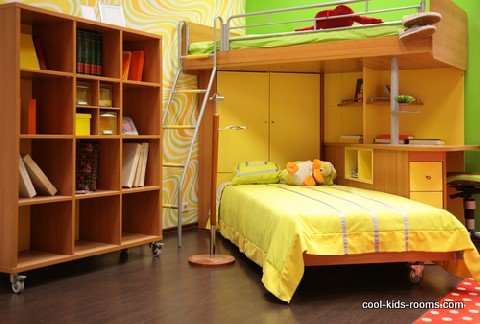
Read the description below and answer as a comment with the description of your own bedroom.
Hello everybody this is my bedroom and I want you to know a bit about it. My bedroom is so big and comfortable. It is painted yellow and green color and it has such a wonderful wall paper that cover the front part. There is a book case with a lot of literature and pedagogy books. These books are so interesting. Behind my bed, there is
such a nice closet where I keep my clothes and personal belongings. Next to my bed, I have my laptop desk with all the important papers. My room is so tidy and it is always clean.
Now it is your turn, you should comment to this example with your own description. Remember to use so and such.
THIS IS MY ALBUM BY 6TH GRADE A
Visitors of this post will see five videos by students of the sixth grade A. They are presenting their products: An album about their daily routine and free time activities.
Objective of the Activity:
Give personal infromation
Review and use the present tense and frequency adverbs.
Objective of the Activity:
Give personal infromation
Review and use the present tense and frequency adverbs.
Some Videos From 9th A
I think the purpose of this activity was attained. Most of the students commented and did an excellent job. You made some mistakes but we can improve along the path. I am sure you will improve a lot this year. Congratulations!!! For those students who did not do the exercise of making comments, you need to be more involved in the activities which are developed in class. Classes are also those activities which include the use of new technologies (ICT´s).
Att: Mr. Fabián Padilla
11º C - D: ICT'S AND AND WEB 2.0
ICT’s or Information and Communication Technologies are extremely related to WEB 2.O. This is going to be the topic in our New Technologies class for March 9th / 10th. Click on this link and watch the video to participate in the class activities.
When you finish watching the video clich here to download a handout. Work on it and send it to my e-mail.
When you finish watching the video clich here to download a handout. Work on it and send it to my e-mail.
REMEMBER HOW TO WRITE A SUMMARY
Here you will find key aspects to consider when writing the summary of a text.
Take these steps into account for the summary about the article "A plane crashes into the Hudson"
How to Write a Summary
1) Divide…and conquer. First off, skim the text you are going to summarize and divide it into sections. Focus on any headings and subheadings. Also look at any bold-faced terms and make sure you understand them before you read.
2) Read. Now that you’ve prepared, go ahead and read the selection. Read straight through. At this point, you don’t need to stop to look up anything that gives you trouble—just get a feel for the author’s tone, style, and main idea.
3) Reread. Rereading should be active reading. Underline topic sentences and key facts. Label areas that you want to refer to as you write your summary. Also label areas that should be avoided because the details—though they may be interesting—are too specific. Identify areas that you do not understand and try to clarify those points.
4) One sentence at a time. You should now have a firm grasp on the text you will be summarizing. In steps 1–3, you divided the piece into sections and located the author’s main ideas and points. Now write down the main idea of each section in one well-developed sentence. Make sure that what you include in your sentences are key points, not minor details.
5) Write a thesis statement. This is the key to any well-written summary. Review the sentences you wrote in step 4. From them, you should be able to create a thesis statement that clearly communicates what the entire text was trying to achieve. If you find that you are not able to do this step, then you should go back and make sure your sentences actually addressed key points.
6) Ready to write. At this point, your first draft is virtually done. You can use the thesis statement as the introductory sentence of your summary, and your other sentences can make up the body. Make sure that they are in order. Add some transition words (then, however, also, moreover) that help with the overall structure and flow of the summary. And once you are actually putting pen to paper (or fingers to keys!), remember these tips:
Write in the present tense.
Make sure to include the author and title of the work.
Be concise: a summary should not be equal in length to the original text.
If you must use the words of the author, cite them.
Don't put your own opinions, ideas, or interpretations into the summary. The purpose of writing a summary is to accurately represent what the author wanted to say, not to provide a critique.
7) Check for accuracy. Reread your summary and make certain that you have accurately represented the author’s ideas and key points. Make sure that you have correctly cited anything directly quoted from the text. Also check to make sure that your text does not contain your own commentary on the piece.
8) Revise. Once you are certain that your summary is accurate, you should (as with any piece of writing) revise it for style, grammar, and punctuation. If you have time, give your summary to someone else to read. This person should be able to understand the main text based on your summary alone. If he or she does not, you may have focused too much on one area of the piece and not enough on the author’s main idea.
http://www.enotes.com/topics/how-write-summary
Subscribe to:
Posts (Atom)